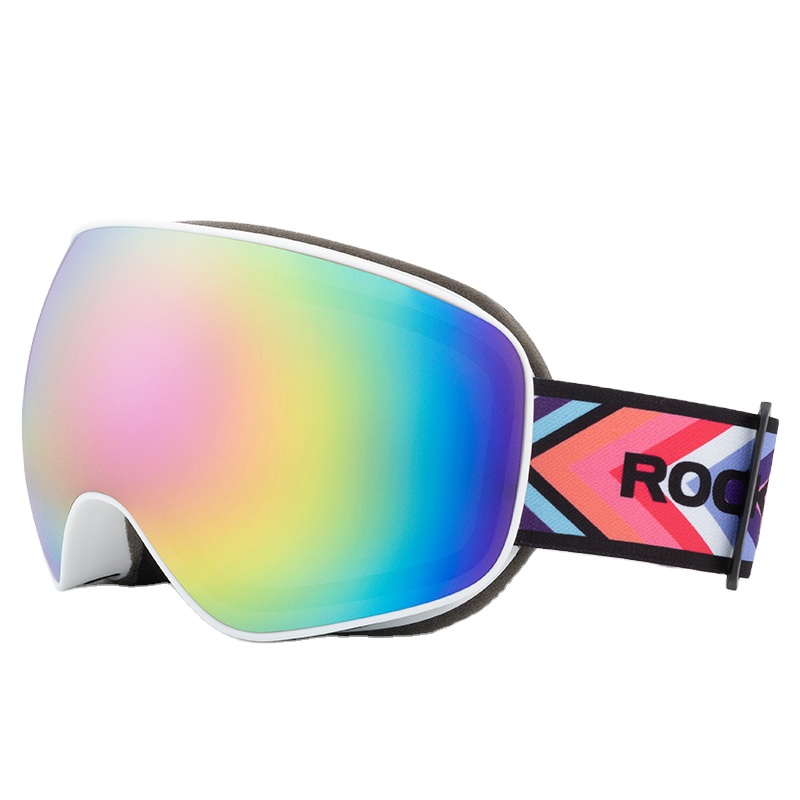
Engineered Gear Portfolio for Professional Procurement
Source high-demand cycling equipment engineered for extreme climates, urban commuting, and multi-terrain reliability.
Technical Compliance & Urban Geography
Boston Micro-Mobility Infrastructure & Optical Regulatory Mandates
Navigating the cycling market in Greater Boston—from the high-density student corridors of Commonwealth Avenue, Massachusetts Avenue, and Harvard Square to the mixed-grade trails of the Emerald Necklace and Charles River Esplanade—demands a specialized manufacturing approach. As the City of Boston accelerates its Vision Zero Action Plan to eliminate traffic fatalities, municipal enforcement and consumer awareness regarding active bicycle illumination have reached unprecedented levels. Importers, regional distributors, and bike-share operations face distinct legal and physical hurdles that generic illumination products fail to satisfy.
Under Massachusetts General Laws Chapter 85, Section 11B, every bicycle operated during the period from one-half hour after sunset to one-half hour before sunrise must be equipped with a front lamp emitting a white light visible from a distance of at least 500 feet. The statute further stipulates that the bicycle must carry a rear lamp or rear reflector exhibiting a red light visible for a minimum of 600 feet under normal atmospheric conditions. For procurement directors sourcing overseas, meeting M.G.L. c. 85, § 11B requires strict ANSI NEMA FL-1 optical compliance, calibrated beam throw angles, and standardized lux-to-candela conversion verified by computerized goniophotometer testing.
Beyond simple visibility, Boston's urban geography introduces the optical challenge of non-glare illumination. Urban riders traversing the Paul Dudley White cycle path or congested downtown traffic along Tremont Street share space with dense pedestrian crowds and vehicle cross-traffic. Sourcing lights that deploy StVZO-style German optical cut-off lines ensures that high-lumen outputs (ranging from 800 up to 3,000 lumens) direct their flux downward onto asphalt rather than scattering into the retinas of oncoming motorists and pedestrians. Our factory's precision anti-glare optical engineering solves this liability risk for U.S. brand distributors.
M.G.L. c. 85 § 11B Photometry
Engineered optics projecting over 500 feet of clean, forward white light and 600 feet of wide-angle peripheral red rear visibility. Fully tested for lumen maintenance and beam integrity.
Cut-Off Anti-Glare Optics
TIR (Total Internal Reflection) PMMA lenses engineered with sharp horizon cut-offs, ideal for Boston's busy multi-use greenways, university paths, and vehicle-dense arterials.
Smart Ambient Sensing
Integrated photo-sensors dynamically switch between low-power daytime running lights (DRL) and high-candela night projection, conserving battery life across extended commuter routes.
Material Science & Durability Engineering
Combating New England Winters: Cold Throttling & Coastal Salt Protection
New England winters present one of the most punishing operating environments in North America for cycling electronics and accessories. Boston averages significant sub-zero freeze-thaw cycles between November and April, compounded by heavy marine salinity from Massachusetts Bay and relentless municipal road de-icing via calcium chloride and rock salt slurries. Generic LED lights manufactured with non-anodized housings, cheap ABS clamps, and basic silicon plugs invariably suffer catastrophic internal ingress, thermal cracking, or localized circuit shorts within weeks of winter deployment.
To insulate brand owners against warranty spikes, Zhejiang Narzo Technology employs aerospace-grade 6061-T6 aluminum alloys precision-machined via multi-axis CNC. The housings undergo Type III hard-anodization, achieving a corrosion-resistant barrier tested under ASTM B117 salt spray standards for over 96 hours without oxidation. Internally, our driver assemblies feature negative temperature coefficient (NTC) thermistors configured with customized firmware algorithms. When ambient temperatures on the Longfellow Bridge plummet to -15°C (5°F), the circuit actively balances current flow to prevent sudden lithium dendrite formation and voltage sag, allowing 18650 and 21700 lithium-ion cells to discharge at maximum efficiency.
Furthermore, water ingress prevention requires industrial-grade sealing. Narzo's lights incorporate double-molded O-rings, ultrasonic high-frequency welding, and reverse-insertion silicone covers for USB Type-C power ports, securing certified IPX6 to IPX8 ingress protection. Whether submerged in slush puddles along Storrow Drive underpasses or exposed to freezing rain on the Minuteman Commuter Bikeway, our structural design prevents moisture penetration, protecting internal SMD LED arrays and integrated Battery Management Systems (BMS).
| Engineering Parameter | Narzo B2B Industrial Standard | Market Standard (Generic OEM) | Direct Benefit for Boston B2B Buyers |
|---|---|---|---|
| Housing Material | CNC 6061-T6 Aluminum + Hard Anodizing | Recycled ABS / Basic Polycarbonate | Complete resistance to road salts, impact, and cold-induced brittleness. |
| Low-Temp Cell Performance | Automotive-grade 21700 / 18650 with NTC Thermal Logic | Standard Li-ion cells without cold regulation | Prevents sudden battery shutoff at -15°C (5°F); extends runtime by 45%. |
| Water Ingress Standard | IPX7 / IP68 (Dual High-Frequency Welded Gaskets) | IPX4 (Basic splash resistance) | Zero failure during winter slush, freezing coastal storms, and rain-soaked storage. |
| Charging Port Reliability | Internal waterproof seal + IP67 USB-C PD Interface | Unsealed micro-USB with loose silicone caps | Eliminates terminal corrosion caused by road salt and high ocean humidity. |
| Mounting Hardware | Glass-fiber reinforced nylon + stainless hardware | Standard brittle plastics with zinc screws | Vibration-proof locking over Boston cobblestones and rutted asphalt. |
Commercial Forecast & Logistics
Boston Wholesale Trends: E-Bike Integration & Port Conley Freight Optimization
The cycling ecosystem across Eastern Massachusetts is experiencing a decisive paradigm shift. Fueled by university populations across Cambridge, Somerville, and Boston proper, alongside corporate campus expansion in the Seaport District, electrically assisted mobility (E-Bikes and cargo bikes) has surged by over 38% year-over-year. This transition dictates that bike lights can no longer exist solely as standalone battery-operated gadgets. Boston B2B wholesalers are actively ordering dual-mode illumination systems that can either run on internal rechargeable cells or tap directly into 6V–60V e-bike motor step-down converters (Bosch, Shimano, and Bafang systems).
Simultaneously, retail bike shops (IBDs) and regional sporting goods chains in New England operate under tight seasonal cash flows. Sourcing from a factory that requires massive 5,000-unit minimum order quantities poses prohibitive inventory risks. Zhejiang Narzo Technology resolves this friction through agile minimum order quantities (MOQs from 2 to 10 units for stock items) alongside private-label customization starting at accessible thresholds. This enables Boston distributors to run quarterly test batches, synchronize SKU variants with seasonal shifts, and introduce branded product lines without excessive capital stagnation.
From a supply chain logistics vantage, shipping directly to the Port of Boston’s Conley Container Terminal provides New England distributors with a distinct competitive advantage over routing freight through congested ports like New York/New Jersey. Containerized cargo cleared at Conley bypasses I-95 corridor bottlenecks, slashing inland drayage lead times by 3 to 5 business days. For urgent seasonal launches or high-turn replenishment cycles, our direct tie-in with Logan International Airport (BOS) air cargo corridors ensures express custom-branded product deliveries within 7 business days of factory release.
Manufacturing Superiority: Zhejiang Narzo Technology Co., Ltd.
Audited facility capabilities, in-house quality control labs, and end-to-end production lines verified on-site by TÜV Rheinland.
Tensile & Shear Testing
In-house computerized tensile test benches measure the ultimate yield strength of handlebar brackets, silicone retaining straps, and safety latches up to 500 N force.
Hydrostatic Pressure Lab
Static water pressure and hydrostatic submergence testing chambers verify real-world IPX6/IPX7 water tightness across light enclosures, battery compartments, and welded bags.
TÜV On-Site Audited
Full operational evaluation and supplier certification by TÜV Rheinland, validating our 366-person workforce, social accountability, environmental management, and QC chain.
3D Simulation & SMT
Integrated product engineering from 3D CAD simulation, rapid SLA prototyping, high-frequency ultrasonic casing welding, to automated surface-mount PCB placement.
Boston B2B Procurement FAQ
Direct answers to technical specifications, local legal requirements, and wholesale terms for Massachusetts buyers.
QHow do your bicycle lights ensure compliance with Massachusetts M.G.L. c. 85, § 11B?
Every light batch slated for Massachusetts distribution is calibrated to project at least 500 feet of clean, uninterrupted white light via precision optical reflectors, exceeding the statutory requirement. Rear warning units feature high-efficiency wide-angle LEDs visible beyond 600 feet, complete with lab-certified photometric test data for commercial peace of mind.
QHow do your lithium-ion battery packs maintain run-time during Boston freezing temperatures?
We specify high-capacity 18650 and 21700 lithium cells combined with custom-coded Battery Management Systems (BMS) containing NTC thermistors. This architecture prevents severe voltage drop-offs and thermal throttling down to -15°C (5°F), preserving up to 85% of standard battery capacity during severe New England winters.
QCan we order customized private-label packaging and laser-etched branding?
Yes. As a full OEM/ODM facility, we provide high-precision laser engraving on aluminum housings, customized pad-printing on mounting clamps, tailored Pantone colorways, and retail-ready packaging designed with customized UPC barcodes and multilingual inserts.
QWhat are the minimum order quantities (MOQ) for Boston-based retail chains and startups?
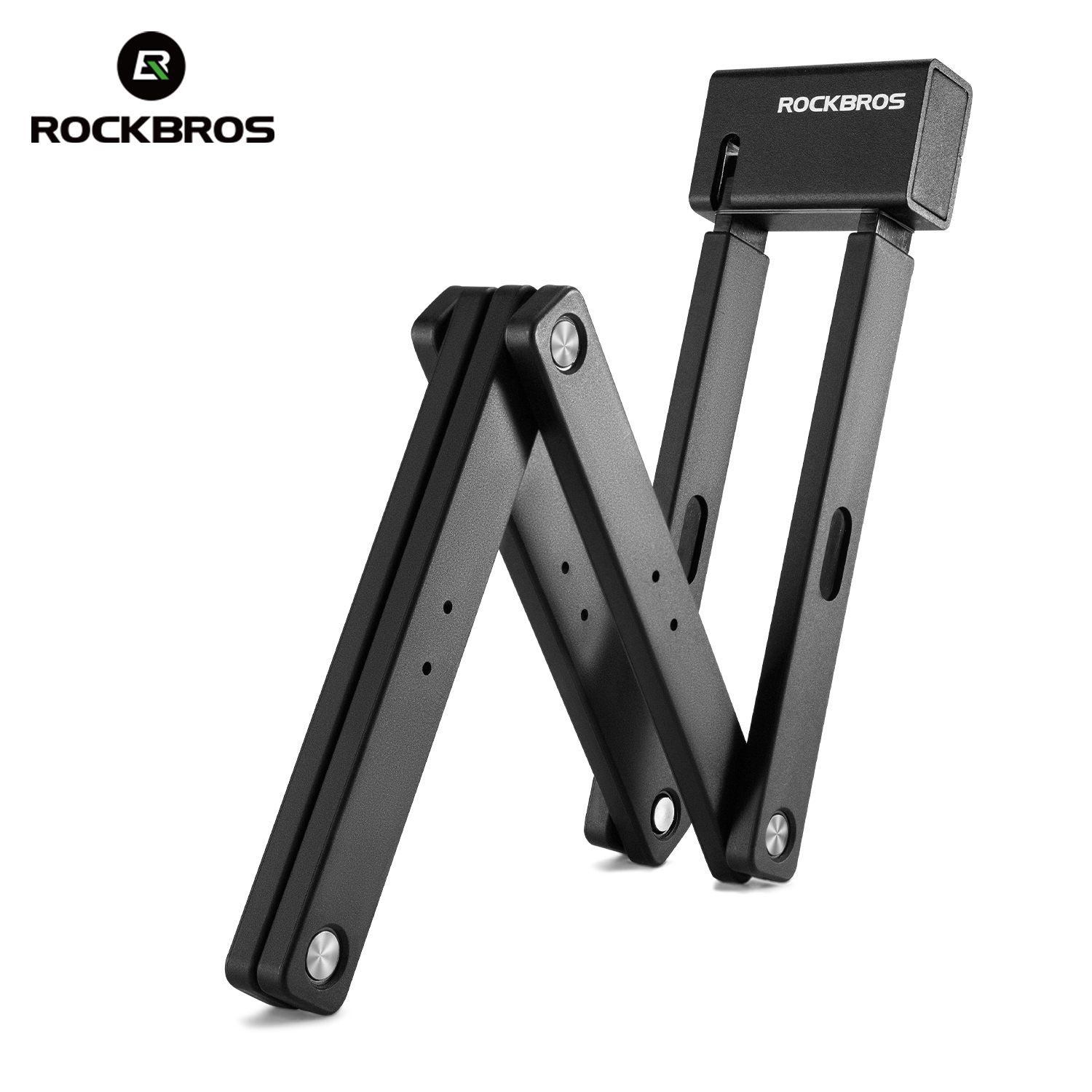
In-stock cycling lights, titanium folding locks, waterproof bags, and electronic accessories feature low starting thresholds from 2 to 10 units. For fully customized OEM production runs—including custom optical tooling or proprietary PCB modifications—MOQs start from 500 to 1,000 units depending on technical specifications.
QWhat is the shipping transit timeline to the Port of Boston (Conley Terminal)?
Ocean freight departing from Ningbo or Shanghai port directly to Conley Container Terminal in Boston typically averages 28 to 35 calendar days. For sample evaluations or urgent replenishment, our door-to-door express air freight services reach Logan International Airport (BOS) in 5 to 8 business days with complete customs handling.
QWhat testing guarantees are provided against coastal marine salt corrosion?
All aluminum housings undergo Type III hard anodization and pass our in-house ASTM B117 salt fog chambers for 96 hours continuous exposure. Hardware screws are manufactured from 304 or 316 stainless steel to eliminate oxidation risks caused by Boston de-icing salt slurries and coastal atmospheric moisture.
Ready to Upgrade Your Illumination Supply Chain?
Consult directly with our Zhejiang engineering facility. Receive full photometric reports, verified TÜV documentation, sample evaluation units, and transparent container-level B2B price lists tailored for the Boston and New England market.