Technical Insight & Market Dynamics The Architecture of Modern Carbon Cycling Footwear: Materials, Biomechanics & Sourcing
Providing genuine Information Gain for purchasing executives, product designers, and retail category managers navigating competitive consumer expectations.
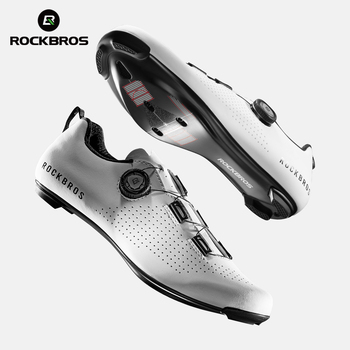
The global demand for high-performance cycling equipment has undergone a paradigm shift over the past 36 months. Where standard glass-fiber reinforced nylon soles once dominated the mid-tier consumer bracket, professional riders, club racers, and gravel enthusiasts now demand authentic Carbon Fiber Cycling Shoes. This surge is not merely aesthetic; it is governed by the biomechanical physics of competitive cycling. During maximal sprint outputs exceeding 1,200 watts—or continuous sustained threshold efforts of 300 to 400 watts—any micro-flexion across the plantar fascia results in instantaneous kinetic dissipation, localized pressure accumulation ("hot spots"), and irreversible neuromuscular fatigue over 100+ kilometer stages.
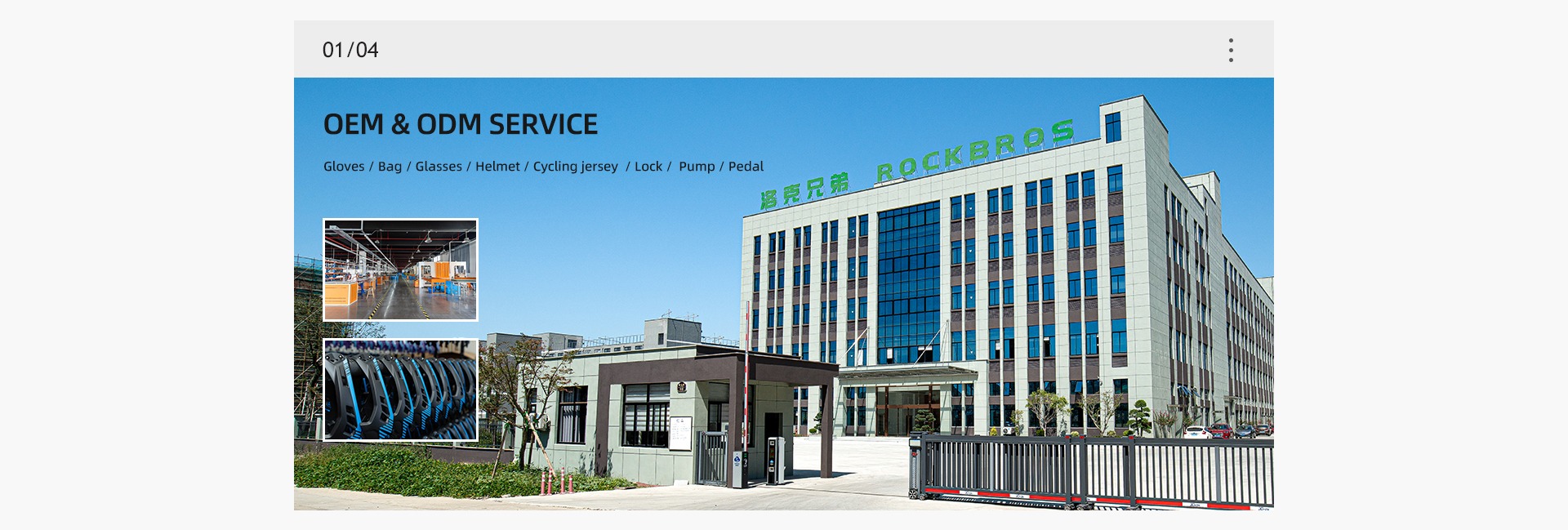
However, engineering a market-leading carbon fiber cycling shoe requires balancing three interdependent engineering vectors: Longitudinal & Torsional Stiffness, Anatomical Volume Dynamics, and Structural Adhesive Longevity. Below, our technical engineering team details the manufacturing specifications, testing regimens, and structural considerations that define world-class cycling shoes manufactured by Zhejiang Narzo Technology Co., Ltd.
| Technical Parameter | Standard Nylon / Glass-Fiber Outsole | Semi-Carbon / Carbon Matrix Plate | Narzo Pro 100% Carbon Fiber Outsole |
| Stiffness Index (Laboratory Scale) | 6.0 – 8.0 (Noticeable flex under >500W load) | 9.0 – 10.5 (Moderate torsional flex) | 12.0 – 14.0 (Zero measurable deflection) |
| Weight Per Sole Unit (Size 42) | 110g – 145g | 85g – 105g | 48g – 62g (High-Modulus UD layup) |
| Stack Height (Cleat to Footbed) | 7.5mm – 9.0mm (Higher center of gravity) | 5.5mm – 7.0mm | 3.8mm – 4.5mm (Maximum pedal efficiency) |
| Tensile & Torsional Fatigue Life | Degrades ~25% after 15,000 km | Degrades ~12% after 20,000 km | Zero elastic degradation over 50,000+ km |
| Manufacturing Methodology | Standard plastic injection molding | Co-injected nylon with embedded carbon insert | High-pressure autoclave / Compression carbon molding |
| Cleat Insert Thread Shear Strength | >70 Nm (Risk of stripping in plastic boss) | >95 Nm | >140 Nm (Stainless inserts bonded into carbon) |
Biomechanical Power Transfer and the Science of Stack Height
A primary driver for selecting true carbon composite outsoles is stack height reduction. In cycling mechanics, stack height refers to the distance between the cleat contact surface and the rider's footbed. Standard injection-molded nylon soles require wall thicknesses of 7 to 9 millimeters to prevent structural buckling under pedaling loads. This excessive distance acts as a leverage arm that promotes rocking torque and lateral ankle instability at the dead spots of the pedal stroke (12 o'clock and 6 o'clock positions).
In contrast, using aerospace-grade Toray carbon fiber prepreg sheets, Zhejiang Narzo Technology Co., Ltd. consolidates layers under high-pressure heated tooling to achieve a stack thickness of less than 4.5 millimeters while retaining maximum bending resistance. This positions the rider's metatarsal head closer to the pedal axle spindle, eliminating dead-spot power loss, enhancing circular pedaling cadence, and reducing knee joint strain over extended riding hours.
Material Chemistry: High-Modulus Unidirectional vs. 3K Woven Carbon
Purchasing managers frequently ask which carbon configuration best matches their product positioning. Unidirectional (UD) carbon sheets arrange fibers in perfectly parallel bundles, delivering the highest strength-to-weight ratio along the primary axis of pedaling forces. By cross-plying UD layers in multi-axial schedules (0°, +45°, -45°, 90°), our engineers tailor the flex profile so the outsole remains uncompromisingly rigid along its longitudinal axis while providing micro-compliance around the heel counter to dampen high-frequency road vibrations before they reach the rider's spine.
Outer layers of 3K twill woven carbon fabric are integrated into high-stress areas, particularly surrounding cleat-bolt interfaces and toe-box perimeters. The intertwined weave structure prevents crack propagation from road pebble strikes or over-torqued cleat screws, ensuring that warranty claim rates remain substantially below industry averages.