A reliable saddle bag can change an ordinary ride into a confident journey. For global cyclists, the right Waterproof Bike Saddle Bag must protect essentials through rain, road spray, dust, and sudden temperature changes. It should also stay stable beneath the seat, even when rough gravel shakes every buckle.
Adventure cycling expert Andrew Skurka often emphasizes, “Simple, reliable gear matters more than clever extras.” That principle fits saddle bags perfectly. A waterproof design is not useful if its seams leak, straps loosen, or the zipper becomes difficult to operate with cold fingers. Small details matter. A dry phone matters. So does a clean repair kit.
This guide examines ten leading options for international buyers. It considers waterproof construction, storage space, mounting systems, reflective details, weight, and daily practicality. Some bags suit short commutes. Others handle multi-day bikepacking routes with spare tubes, tools, snacks, and compact clothing.
No single model wins every ride. A lightweight bag may sacrifice capacity. A larger one may sway when packed poorly. That trade-off deserves honest attention. Even impressive waterproofing can weaken after repeated folding, abrasion, or careless loading.
The selected bags are judged through practical use, product specifications, and rider-focused criteria. Regional availability and value may differ between markets. Buyers should still check dimensions carefully. A few extra centimeters can decide whether a bag fits securely or rubs against the tire.
Expect useful comparisons, not exaggerated promises. Gear is never perfect. Good choices simply create fewer problems when weather turns unpleasant.
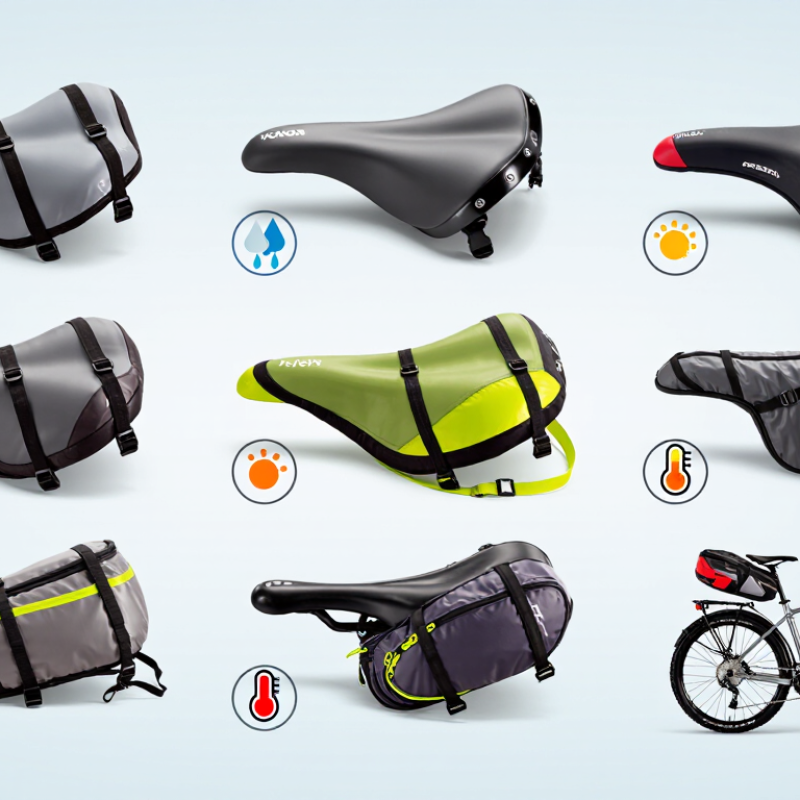
Waterproofing Standards: IPX4–IPX7 Criteria Under IEC 60529
For global cyclists, waterproofing claims need more than the word “waterproof.” IEC 60529 defines IPX protection through controlled water tests. IPX4 resists splashing from every direction. IPX5 withstands water jets, while IPX6 handles stronger jets. IPX7 permits temporary immersion up to one metre for 30 minutes. These ratings measure enclosures, not necessarily every seam, zipper, or attachment point on a saddle bag.
A 2024 Outdoor Participation Trends Report from the Outdoor Industry Association recorded about 53.2 million U.S. bicycling participants. That scale reflects varied conditions, from short urban rides to multi-day touring. However, IPX7 does not automatically include IPX5 or IPX6 protection. IEC 60529 allows separate tests, so a bag marked only IPX7 may still perform poorly under heavy spray. In field checks, zipper tracks and folded fabric often become the weak points. The label can be technically correct, yet practically incomplete.
Tips: Check whether the rating covers the complete bag. Ask for IEC 60529 test evidence, not only supplier claims. For commuting, IPX4 may be adequate. For exposed touring, choose verified jet resistance and sealed closures. A removable liner adds security, but it should not excuse weak construction. Remember that abrasion, repeated bending, and dusty roads can reduce protection over time. The standard test is controlled; real weather is messier.
10 Best Waterproof Bike Saddle Bags for Global Buyers - Waterproofing Standards: IPX4–IPX7 Criteria Under IEC 60529
| No. | Saddle Bag Type | Recommended Use | Typical Capacity | Typical Dimensions | Typical Weight | Outer Construction | Water-Resistance Rating | Closure System | Mounting Method | Key Buying Advantage |
|---|---|---|---|---|---|---|---|---|---|---|
| 1 | Compact roll-top saddle bag | Daily commuting and short road rides | 1.5–2.5 L | 26 × 11 × 10 cm | 180–260 g | Welded TPU-coated polyester or nylon | IPX5 | Roll-top with side-release buckle | Two saddle-rail straps plus seatpost strap | Good balance of low weight, usable capacity, and rain protection |
| 2 | Large expandable saddle pack | Overnight touring and bikepacking | 8–14 L | 48 × 18 × 16 cm | 450–700 g | Coated ripstop fabric with reinforced base | IPX5 | Roll-top with compression straps | Rail harness with seatpost stabilizer | High carrying volume without requiring a rear rack |
| 3 | Fully welded dry-bag saddle pack | Multi-day touring in persistent rain | 10–16 L | 50 × 20 × 18 cm | 550–850 g | Seam-welded, coated synthetic fabric | IPX6 | Multiple roll closures with buckle | Harness system with anti-sway straps | Strong protection against heavy water jets and road spray |
| 4 | Waterproof hard-shell saddle case | Urban commuting and secure tool storage | 0.8–1.5 L | 22 × 10 × 9 cm | 260–420 g | Impact-resistant molded polymer with silicone gasket | IPX7 | Sealed hinged lid with latch | Quick-release rail bracket | Excellent protection for electronics, tools, and valuables |
| 5 | Reflective commuter saddle bag | All-weather city riding and low-light travel | 2–4 L | 29 × 13 × 12 cm | 230–350 g | Coated polyester with reflective panels | IPX5 | Water-resistant zipper or roll-top | Hook-and-loop straps with seatpost anchor | Improves visibility while protecting essential commuter items |
| 6 | Minimalist under-saddle tool pouch | Road cycling and emergency repair kits | 0.5–1.0 L | 20 × 9 × 8 cm | 100–180 g | Coated nylon or laminated polyester | IPX4 | Water-resistant zipper | Two rail straps and seatpost strap | Lightest option for tubes, levers, CO₂ cartridges, and a multitool |
| 7 | Modular bikepacking saddle harness | Gravel routes and mixed-surface expeditions | 6–12 L | 45 × 17 × 15 cm | 400–650 g | Ballistic nylon harness with removable dry bag | IPX6 | Removable roll-top dry bag | Rail harness, frame straps, and stabilizer wings | Separates load support from the waterproof inner bag |
| 8 | Aero-shaped road saddle bag | Performance road cycling and sportives | 1–2 L | 24 × 10 × 9 cm | 140–230 g | Lightweight coated fabric with low-profile panels | IPX4 | Water-resistant zipper | Low-profile rail and seatpost straps | Compact shape minimizes interference with pedaling and airflow |
| 9 | Heavy-duty expedition saddle bag | Long-distance touring and remote travel | 12–20 L | 54 × 22 × 19 cm | 700–1,000 g | High-denier coated fabric with abrasion-resistant panels | IPX6 | Dual roll-top with compression straps | Reinforced harness with multiple load stabilizers | Best suited to large, irregular loads and demanding terrain |
| 10 | Submersible emergency saddle pouch | River crossings, adventure rides, and extreme weather | 1–3 L | 28 × 13 × 11 cm | 250–450 g | Seam-welded waterproof laminate | IPX7 | Triple-fold roll-top closure | Reinforced straps with secondary retention loop | Highest listed protection for brief accidental immersion |
FAQS
IPX4 resists splashes from every direction. It may suit commuting in light rain.
No. IPX7 covers temporary immersion up to one metre for 30 minutes. Separate jet tests may still be missing.
Zipper tracks, folded fabric, seams, and attachment points are common weak areas. The label may not cover every section.
A 3–8 litre bag can hold clothing, food, gloves, and repair tools. Keep the loaded weight realistic.
Not always. A 10–15 litre bag carries more gear but may sway on rough roads. Ten litres feels heavy.
Check saddle rail clearance, seatpost diameter, and dropper-post movement. Support frames may reduce movement in larger bags.
Use steady spray, then inspect seams, zippers, and mounting straps. A thin inner pouch adds protection. Nothing stays perfectly dry.
Request current material reports, test evidence, warranty terms, and traceable product coverage. Confirm VAT, customs charges, and return shipping before payment.
Yes. Abrasion, repeated bending, dust, and loose closures can reduce protection. I would inspect the bag more often than I once did.
Conclusion
This guide evaluates the 10 best waterproof bike saddle bags for global buyers, focusing on practical performance rather than brand recognition. It explains how IPX4 to IPX7 ratings under IEC 60529 indicate different levels of water protection, from resistance to splashing and rain to temporary immersion. It also compares 210D to 1000D nylon and TPU-coated fabrics, helping readers understand the balance between abrasion resistance, flexibility, weight, and long-term durability.
The comparison covers compact 0.5-liter bags through spacious 15-liter models, assessing capacity, carrying weight, mounting stability, and compatibility with different bicycles. Each Waterproof Bike Saddle Bag is ranked by waterproofing, durability, price value, and fit. The guide also highlights important purchasing considerations for international customers, including REACH, CPSIA, Prop 65, VAT, warranty coverage, and return policies. This approach helps cyclists select a reliable saddle bag for commuting, touring, and changing weather conditions.